THE CHALLENGE
Flooding is one of the most expensive climate hazards in the United States, but its financial impact has been hard to measure property by property.
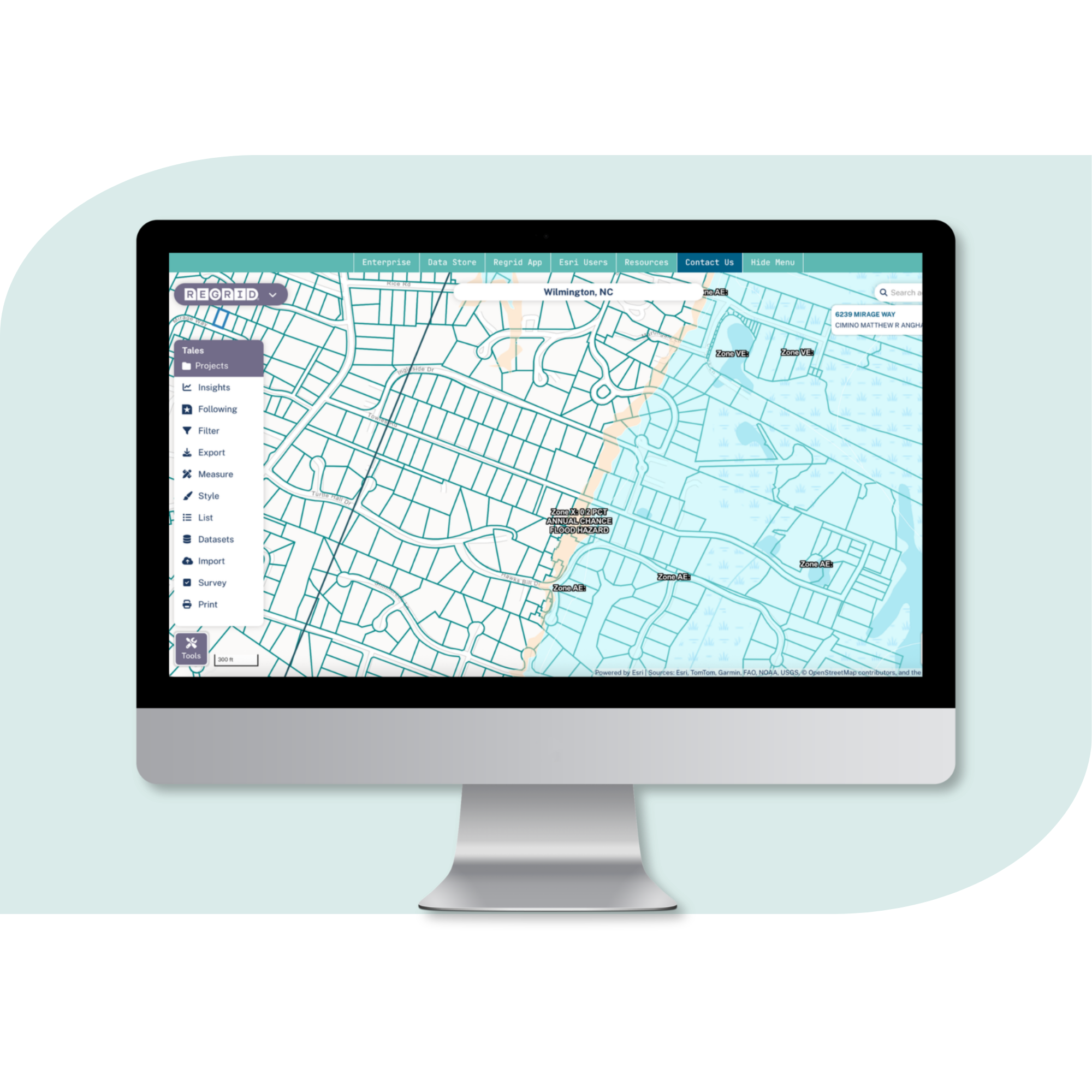
Traditional flood maps provide an important regulatory baseline, but they do not capture every home exposed to flooding. That creates a major blind spot for the real estate market. If buyers, lenders, insurers, municipalities, and regulators cannot see where flood risk is embedded in property values, they cannot accurately understand who is exposed or how much financial risk is sitting inside the market.
To quantify unpriced flood risk at a national scale, the BU PLACES lab team needed a way to connect flood models, tax data, property attributes, and market valuations to the same unit of analysis: the parcel.
THE SOLUTION
Through Regrid’s Data With Purpose program, Boston University’s Places Lab used Regrid’s nationwide parcel fabric as the backbone of its analysis.
With standardized parcel boundaries and attributes in place, the team could geospatially link residential properties to high-resolution flood models from the First Street Foundation. From there, they could calculate flood-adjusted property values and compare them directly with current market prices.
Regrid made it possible to anchor abstract flood risk to real properties across all 50 states. That gave the team a consistent structure for integrating property, ownership, hazard, and valuation data at national scale.
THE RESULTS
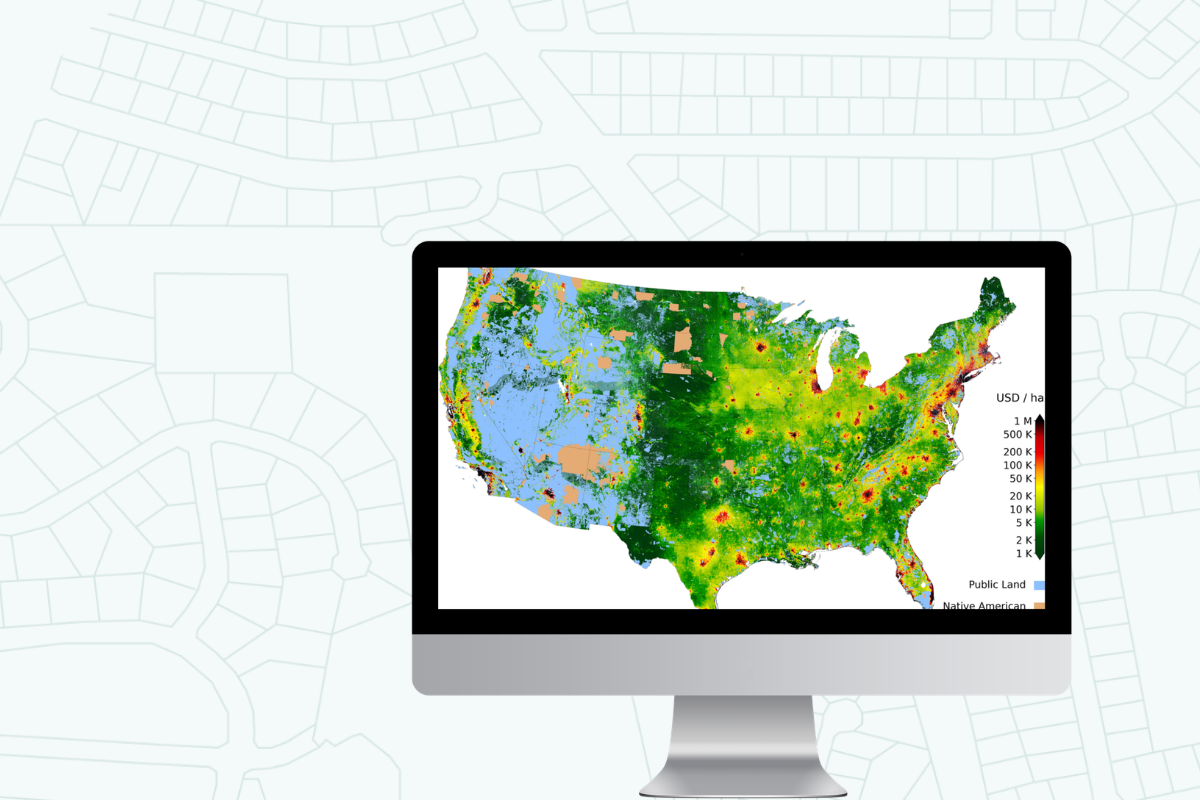
The project identified $187 billion in residential overvaluation, representing homes whose current prices do not fully reflect their flood exposure. Most of that risk was not where many decision-makers might expect it: 83% of the at-risk homes identified in the study sit outside FEMA’s 100-year flood zones.
The research also showed that - while exposure exists nationwide - the South and Southeast hold the highest concentration of unpriced flood risk. Low-income counties were found to be especially vulnerable, pointing to the way climate risk and housing inequality can converge.
For banks and lenders, the project shows how parcel-level data can support more accurate asset pricing and underwriting. For insurers, it creates a clearer path to aligning premiums with true hazard exposure. For municipalities and regulators, it helps reveal where property tax bases, infrastructure plans, and vulnerable communities may be exposed to risks that conventional maps do not fully capture.
Regrid’s parcel data helped bridge the gap between environmental modeling and economic valuation, turning climate risk from a broad concern into property-level intelligence that can support more defensible decisions.