THE CHALLENGE
Groundwater wells are recorded by state agencies, so the data varies widely from place to place. Some records are stored in PDFs or scanned documents. Others have incomplete location data, inconsistent attributes, or no precise coordinates.
That makes it hard to build a clear national picture of groundwater infrastructure. Even basic questions are difficult to answer at scale, like where wells are located, which properties they serve, and how water access varies across regions.
Virginia Tech needed a way to clean, organize, and connect millions of well records to real properties, so the data could be used for planning, policy, risk modeling, and resource management.
THE SOLUTION
Regrid gave the Virginia Tech team a consistent way to connect well records to real properties.
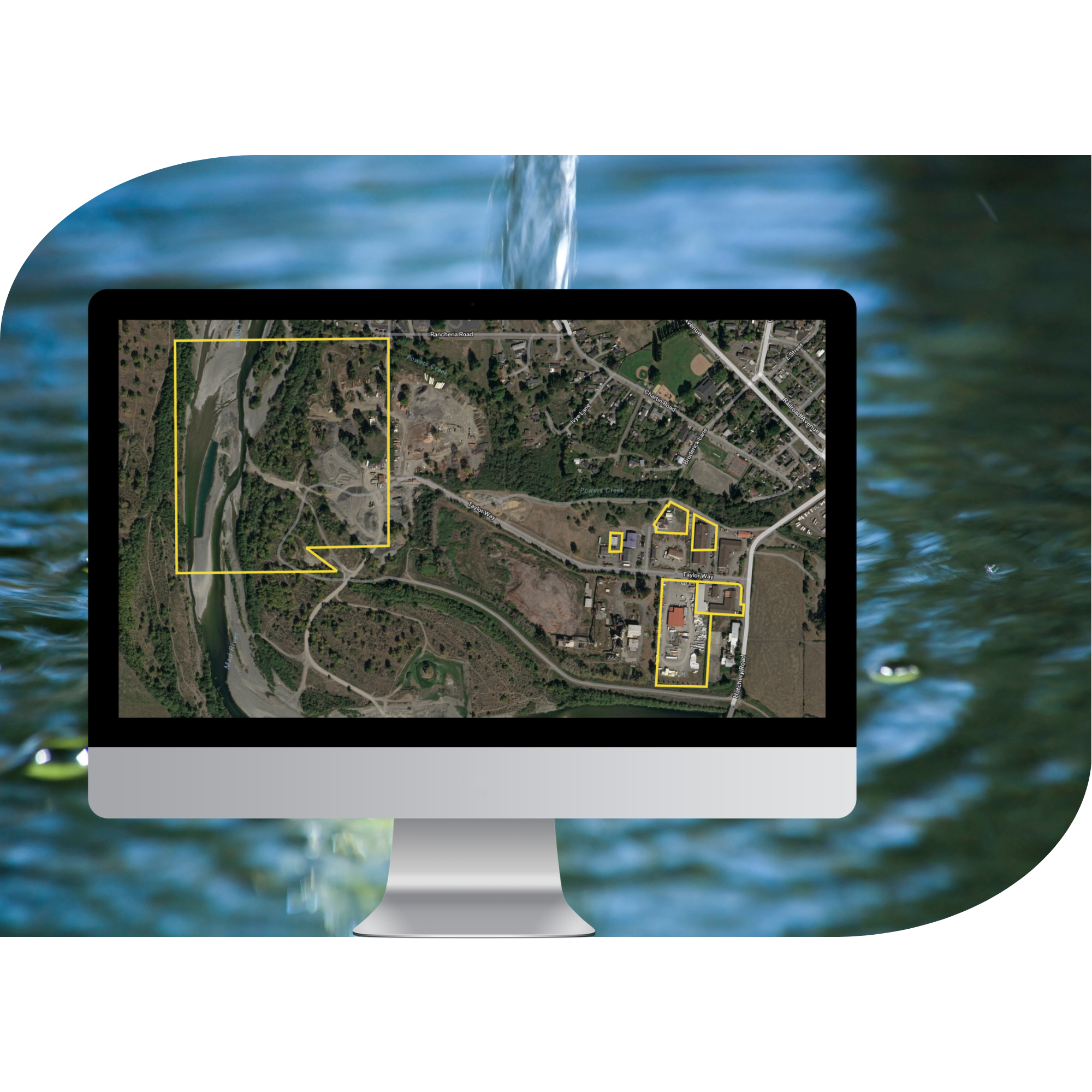
Using Regrid’s nationwide parcel data, the researchers could match well locations to parcel boundaries and associate them with property-level details. Because Regrid standardizes parcel data across the country, the team had one consistent structure to work from, even though the original well records came from many different state systems.
Premium Schema added richer parcel attributes, including standardized land use classifications, which made the dataset more useful for analysis once the wells were matched to properties.
Instead of treating each state as a separate mapping problem, the team could use one parcel framework to organize, validate, and compare well records across the country.
Once the records were linked to parcels, the dataset became much more useful. Researchers could study groundwater access in relation to land use, ownership, climate, infrastructure, and planning data, making the well records easier to use for real-world analysis.
THE RESULTS
The result was the first open-access, parcel-level map of U.S. groundwater infrastructure.
Virginia Tech linked more than 14 million well records from 48 states to individual parcels. That made it possible to see where wells are located, which properties they are connected to, and how groundwater access varies across regions and land use types.
Because the records are now tied to parcels, the dataset can be used alongside other land, climate, infrastructure, and planning data. This gives researchers and decision-makers a clearer way to study water access, identify gaps, and understand where groundwater infrastructure may affect future planning.
With Regrid’s parcel fabric, Virginia Tech created a new foundation for understanding groundwater access across the country, property by property.