-
Products ⌄
Premium parcels
Delivery methods
- Industries ⌄
- Data store
- Property App
- Esri users
- Resources ⌄

- Contact us
When parcel data varies by county, project, or team, planning slows down. A standardized parcel layer gives energy and utility teams a cleaner foundation for siting, outreach, analysis, and delivery.

100%
U.S. Parcel
data coverage
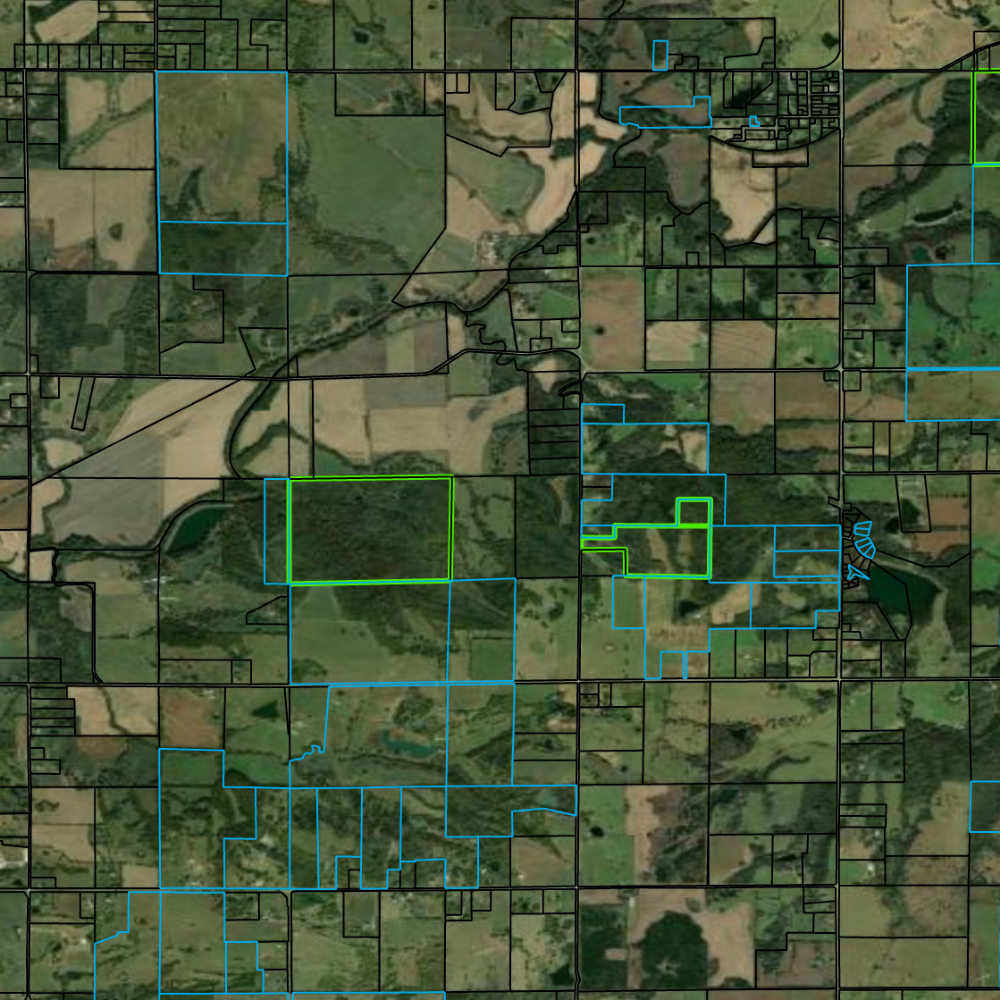
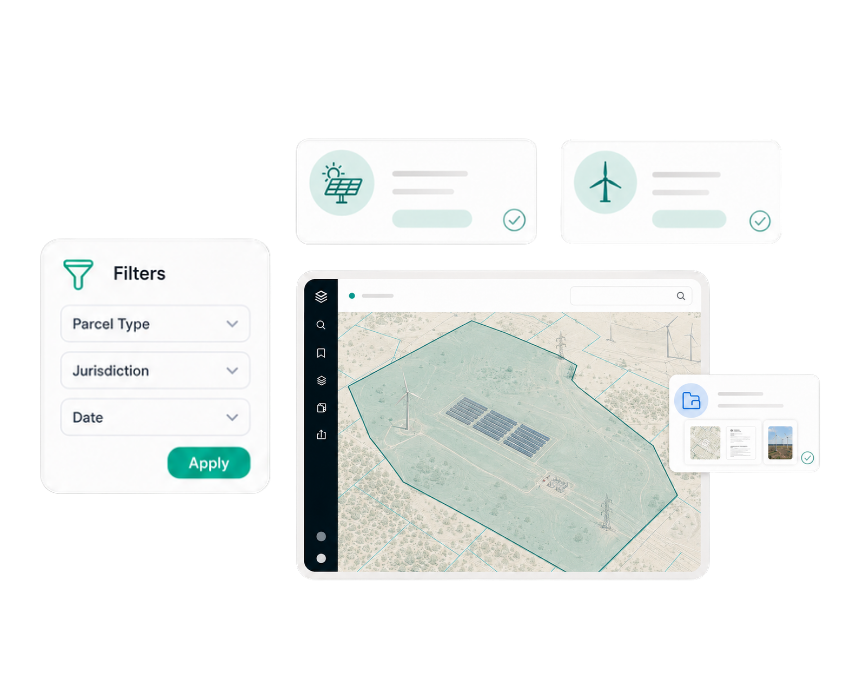
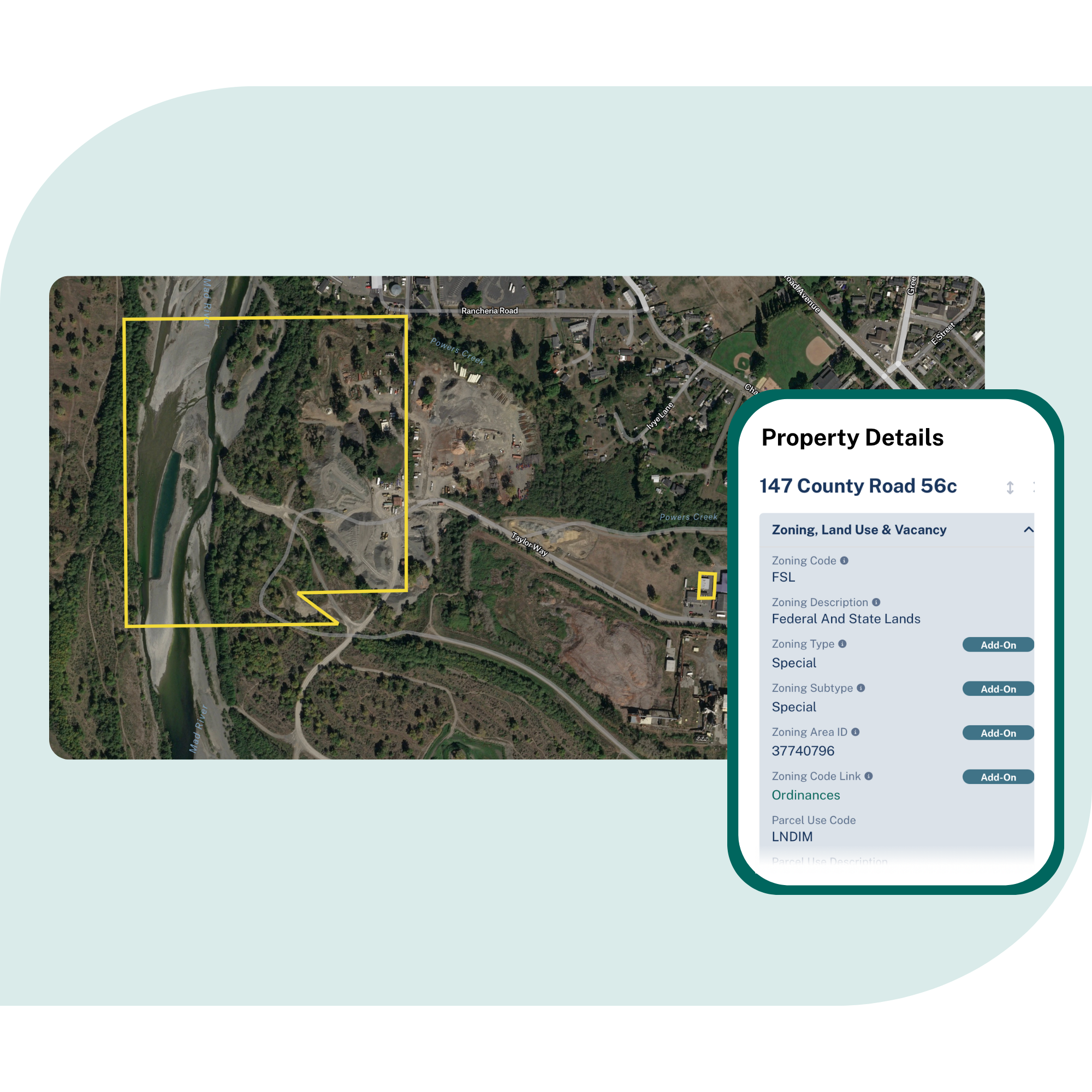
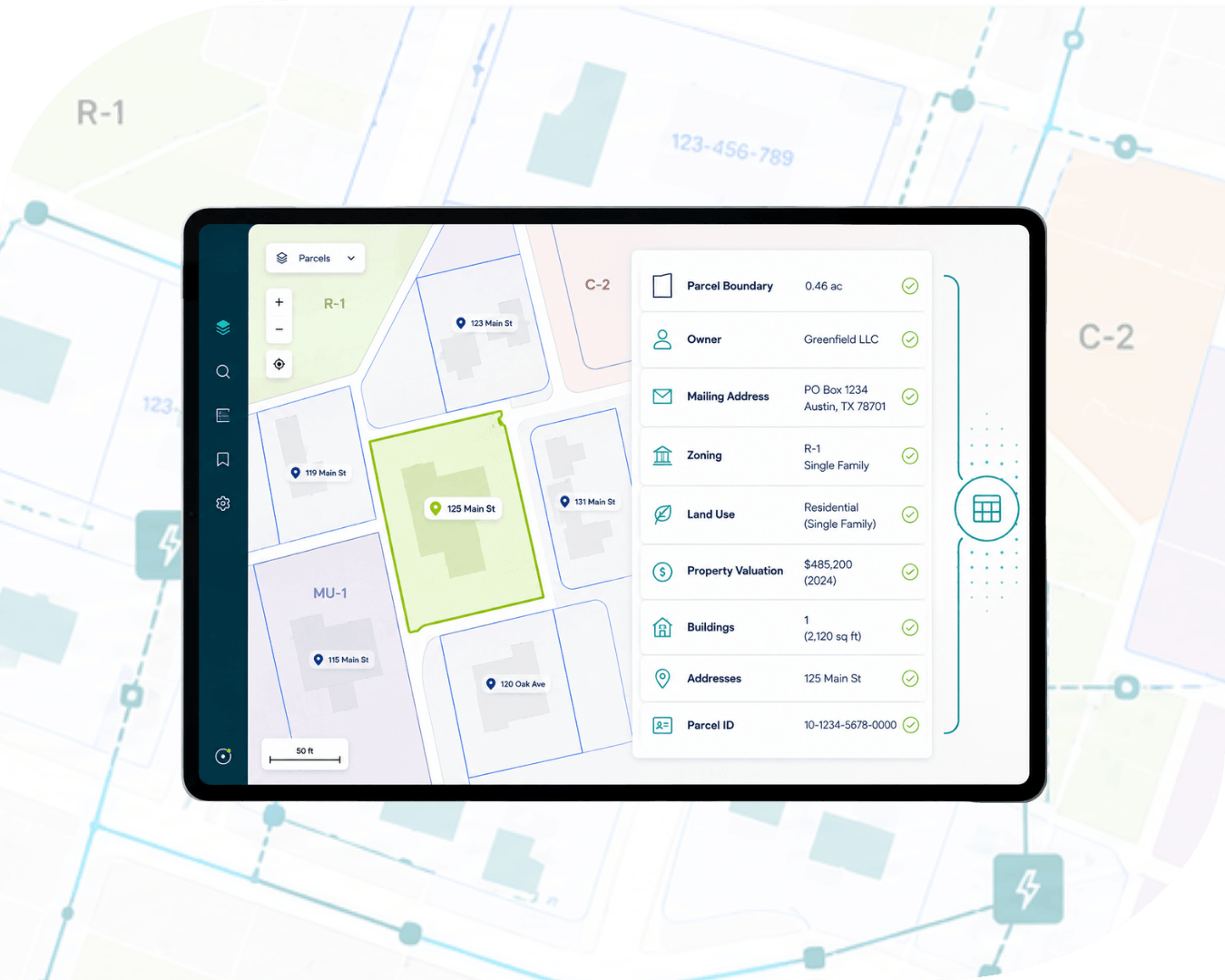
Compare parcels using boundaries, ownership, acreage, zoning, land use, buildings, addresses, and valuation before deeper feasibility work begins.

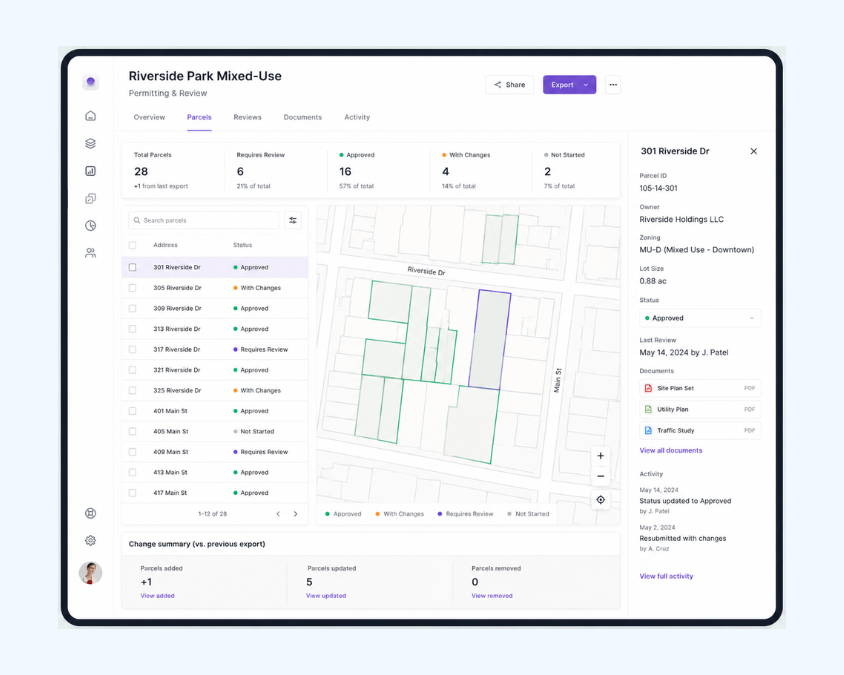
Join service points, facilities, routes, customer records, and internal datasets to parcels so planning and operations share the same property reference.

Deliver parcel data through Feature Service, API, tiles, or bulk files so GIS teams, analysts, field crews, and partners can work from the same foundation.
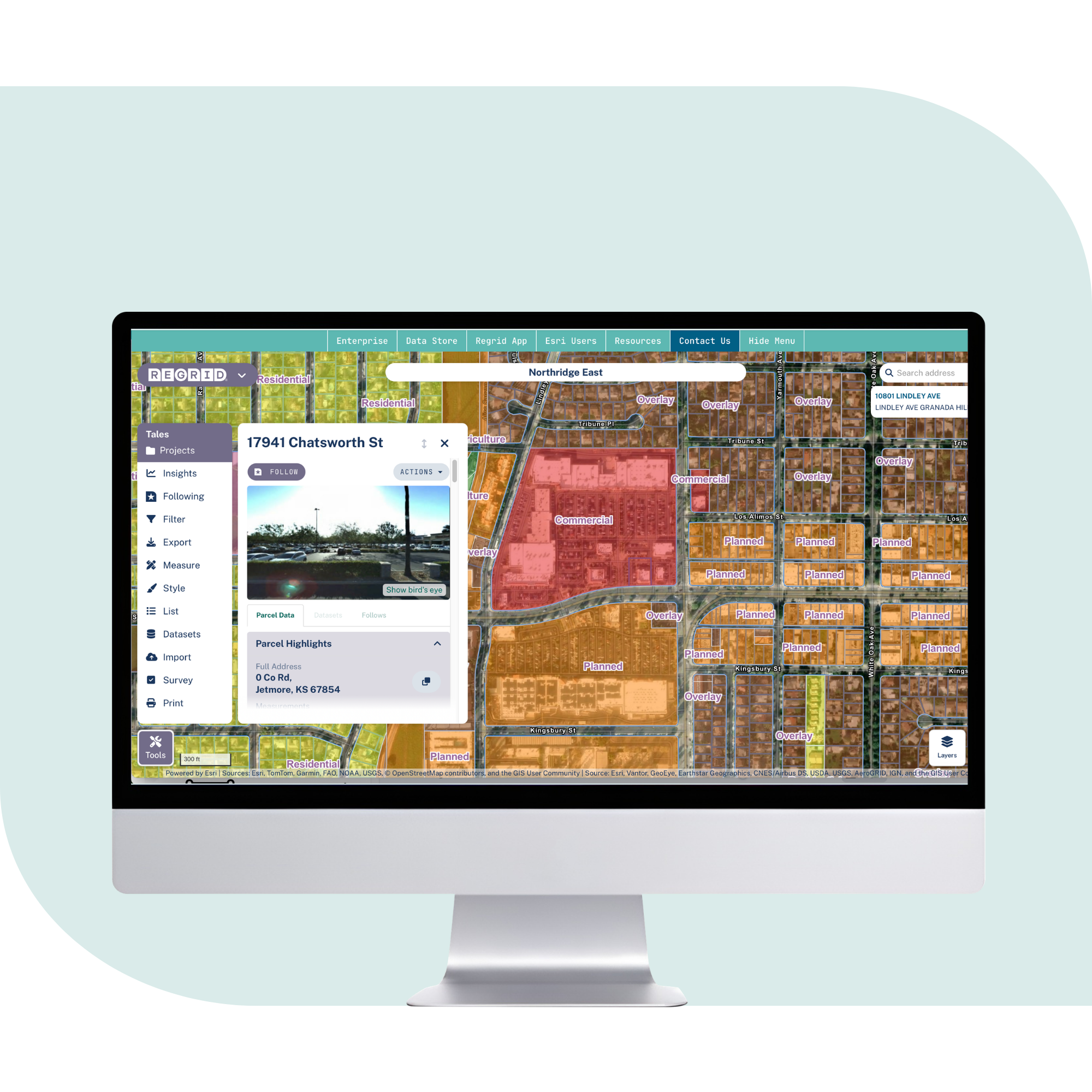
Compare parcel size, ownership, zoning, land use, building context, and surrounding property patterns across counties to narrow the shortlist faster.
Map proposed routes against parcels, owners, addresses, and roadway or rail corridors to support early planning, review, and coordination.
Build owner and mailing lists from selected parcels and buffers. Keep outreach, acquisition, and project records tied to stable parcel IDs as routes evolve.
Understand who and what sits inside a target area. Estimate customer reach, identify served and unserved properties, and plan expansion with clearer property context.
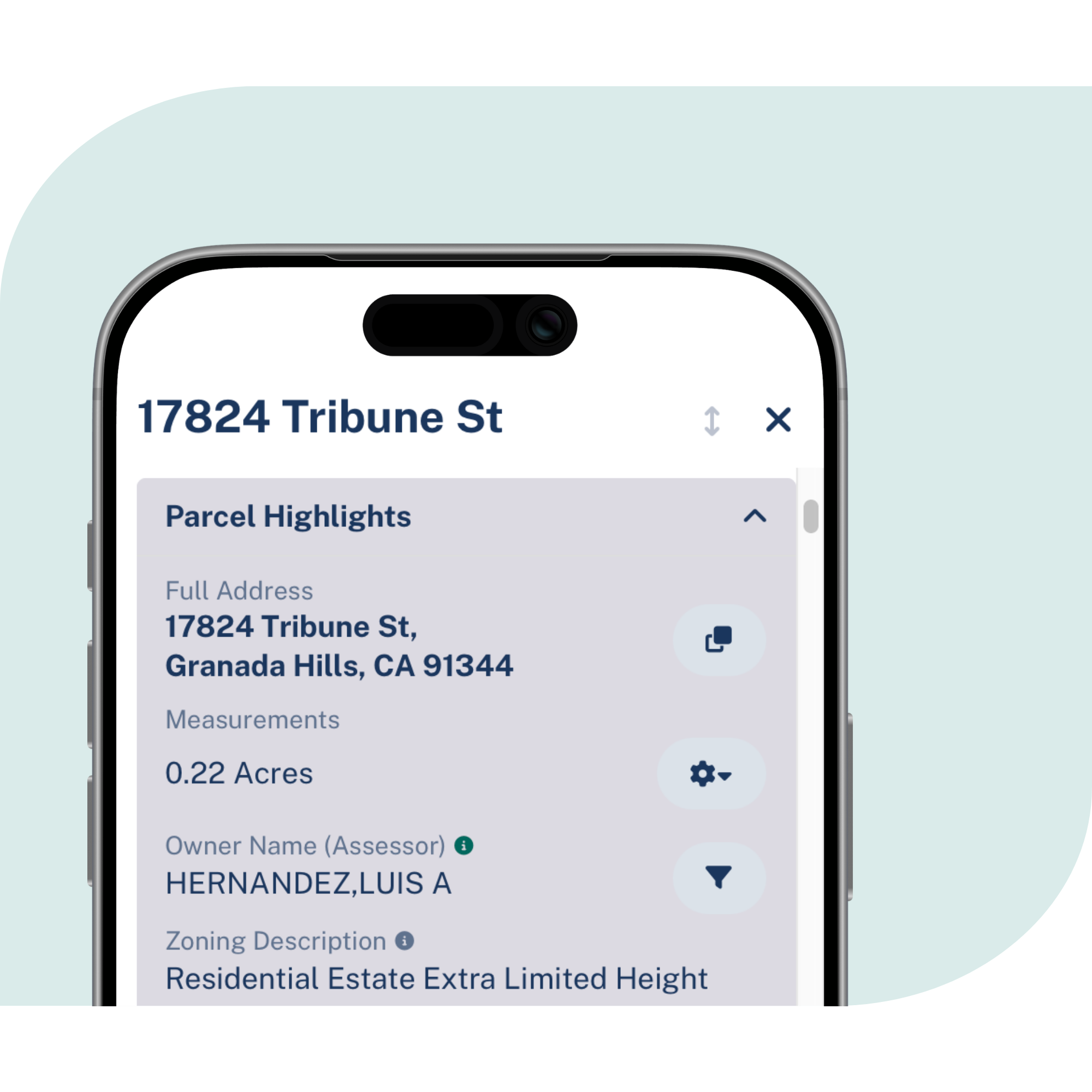
Give crews parcel boundaries, ownership context, addresses, and notes in the field so site checks, inspections, and follow-up work stay connected to the right property.
Serve fast parcel overlays through tiles and API, or use bulk files for modeling and internal analysis. Keep property context consistent across tools and teams.
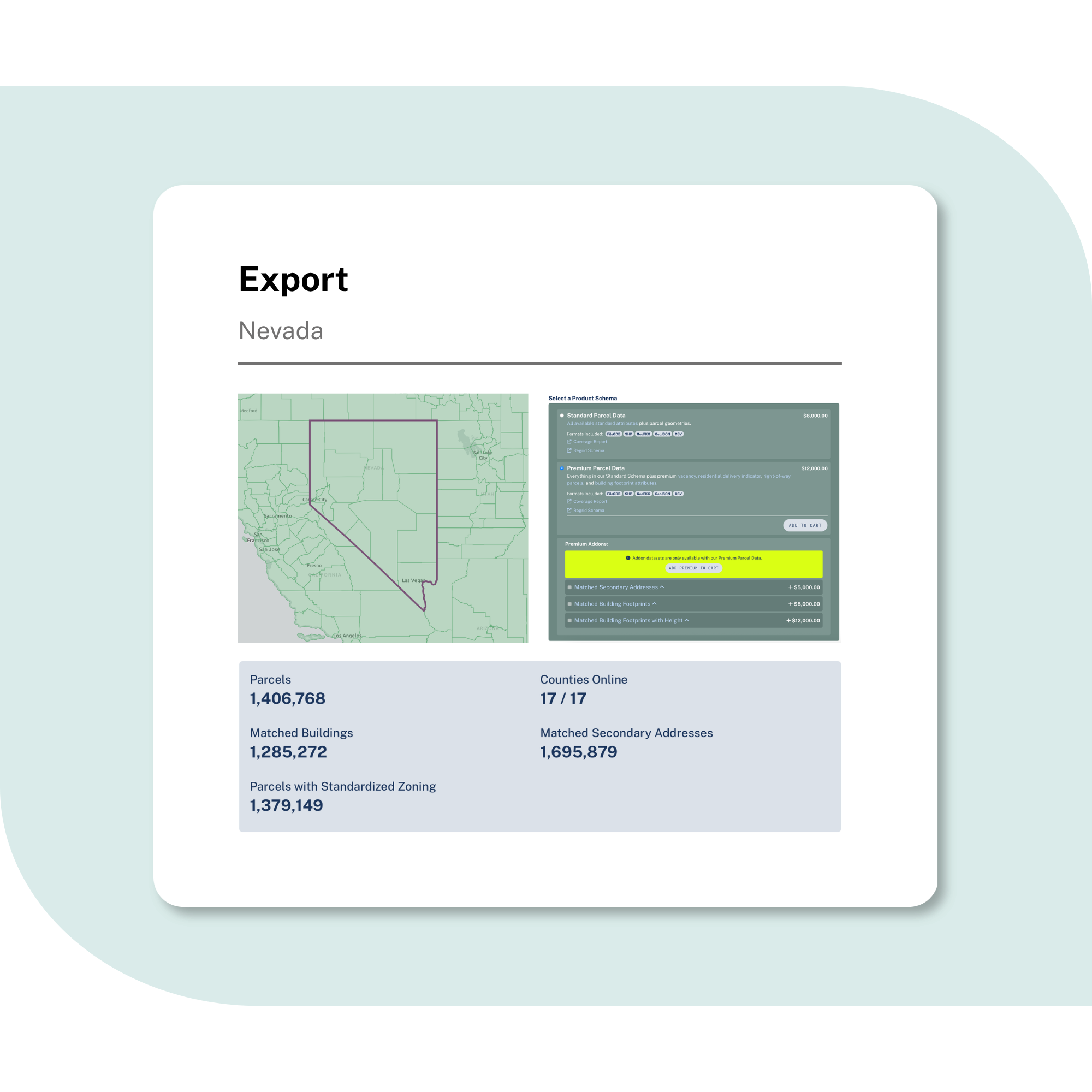
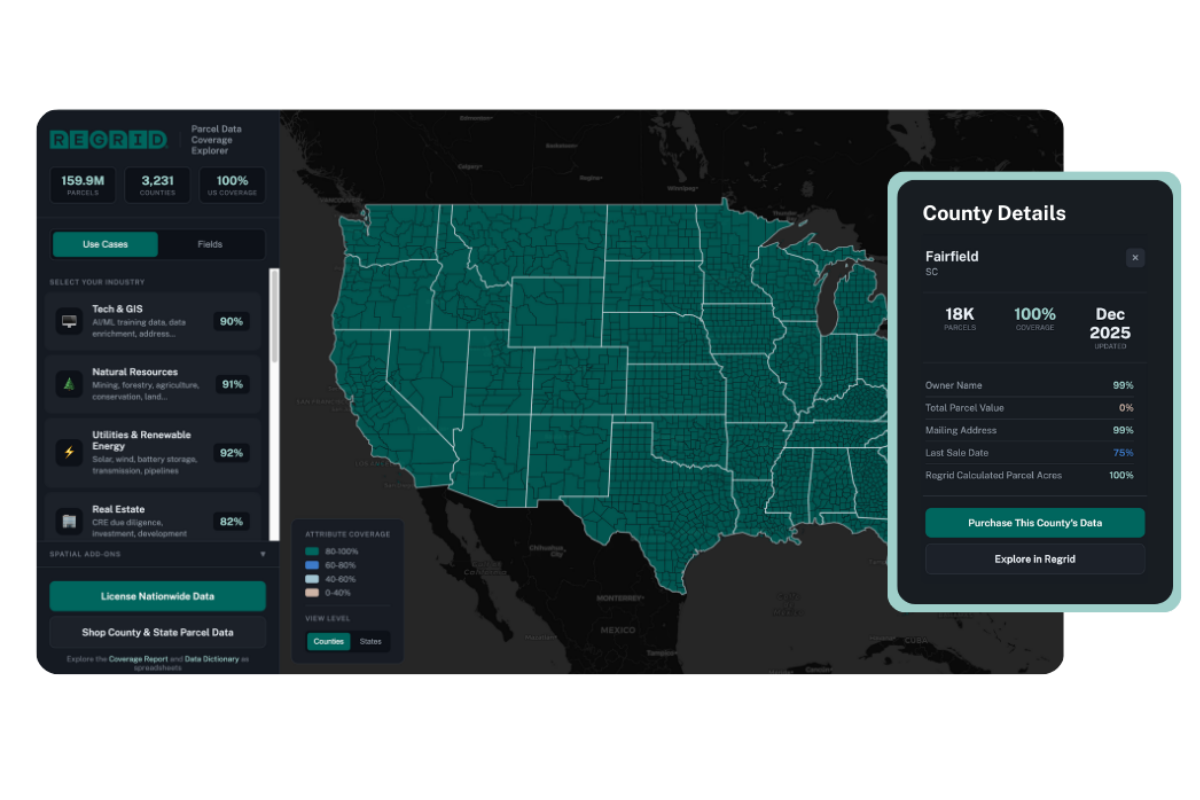
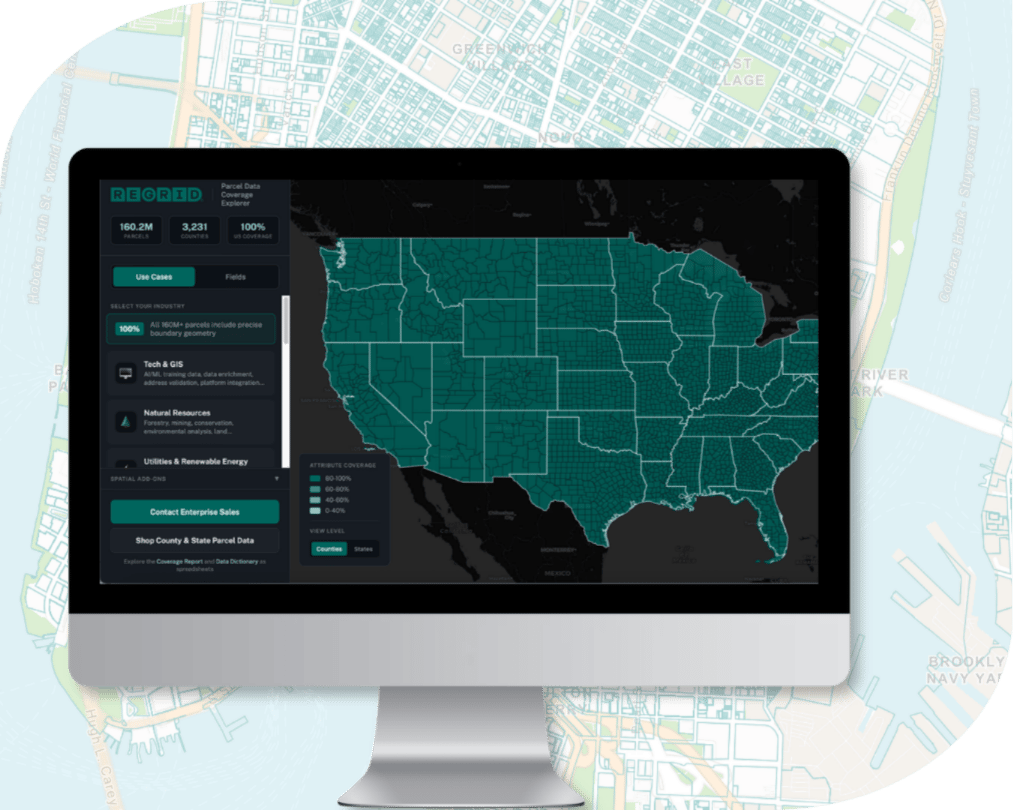
See live coverage, refresh dates, and attribute completeness. Click any county to see parcel counts and field-by-field coverage, then continue to purchase or explore data in the Regrid web app.
Parcel boundaries and sizes, owner names and mailing addresses, zoning, land use, property valuation, buildings, addresses, and stable parcel IDs in one consistent structure.
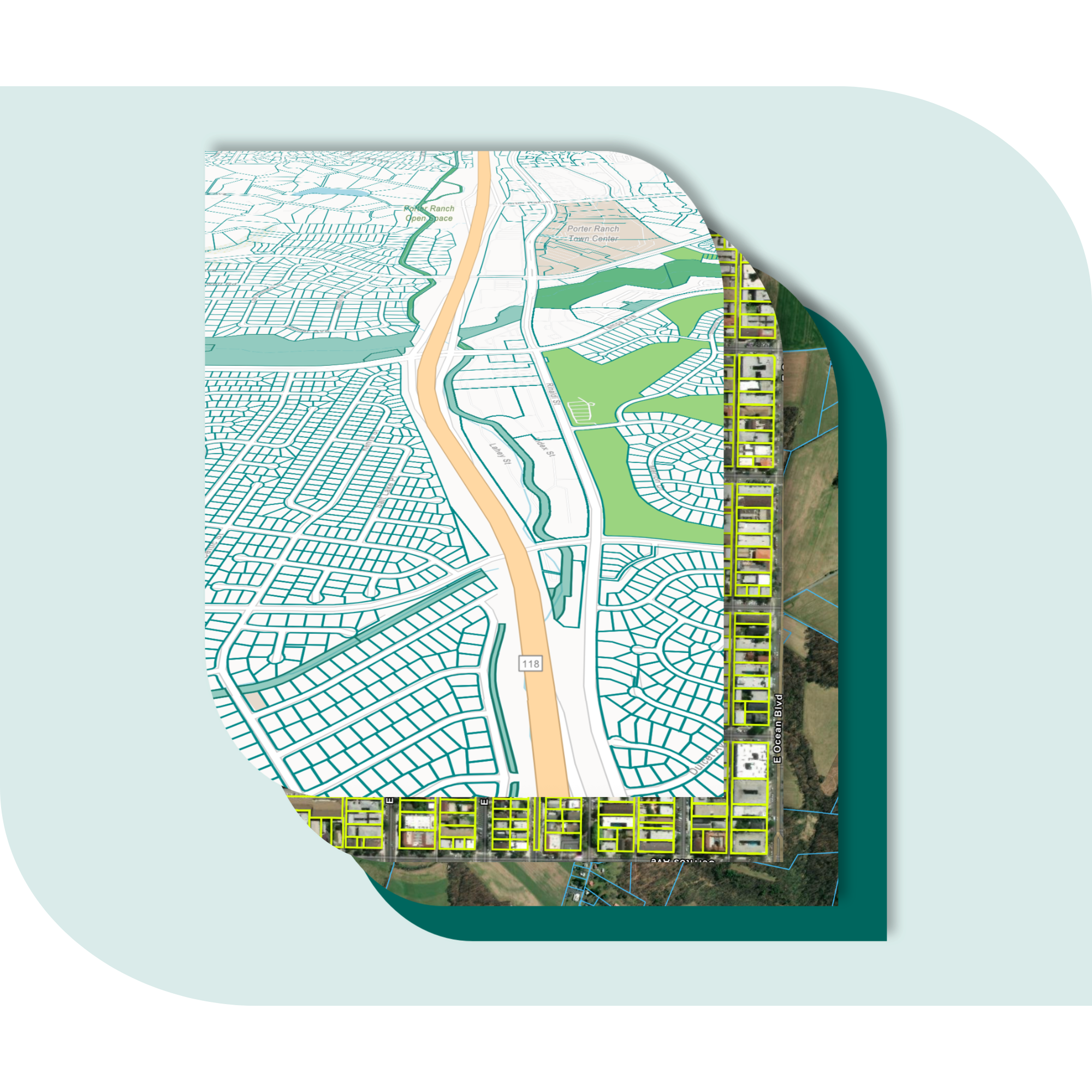
Coverage across every U.S. county, including urban, suburban, and rural areas. Regrid keeps parcel data refreshed so planning reflects current ownership, addresses, buildings, and property changes.
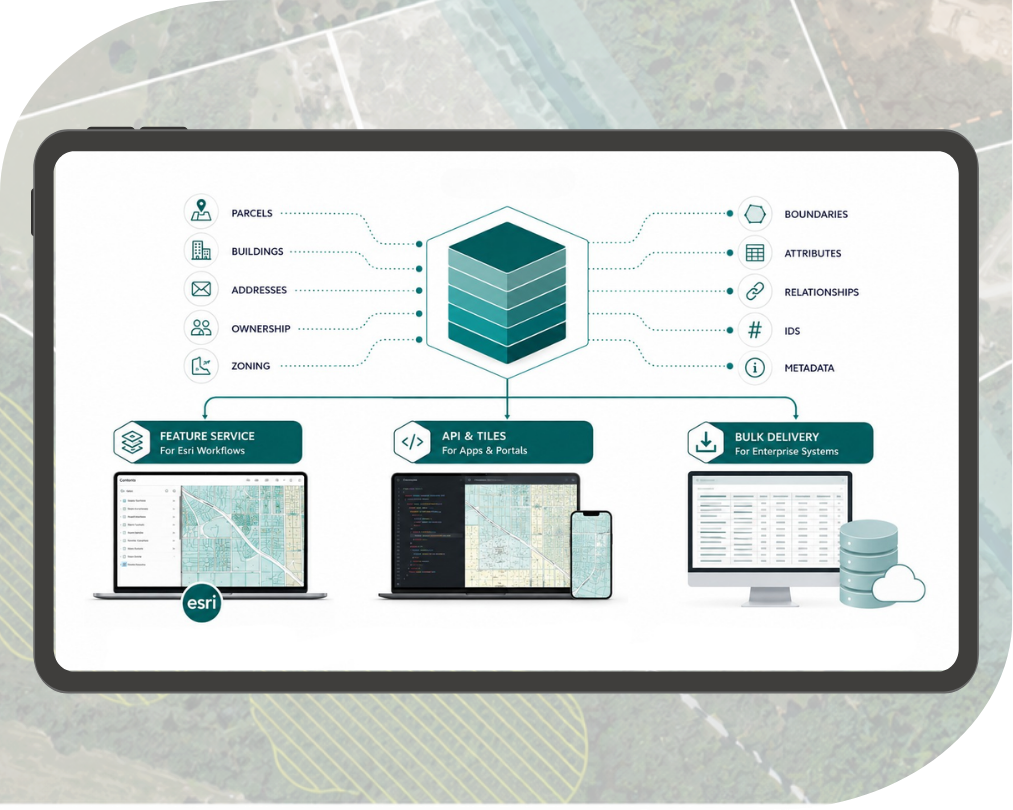
Use Feature Service for Esri workflows, API and tiles for internal apps and portals, or bulk delivery for modeling, analytics, and enterprise data systems.
It means parcel coverage across every U.S. county, delivered in a standardized structure that can support projects across service territories, regions, and states without county-by-county sourcing.
Yes. Regrid data can help teams compare parcels by size, ownership, zoning, land use, building context, and surrounding property patterns. This gives renewable developers a cleaner starting point before deeper feasibility, engineering, or field review.
Regrid data helps teams understand the parcel and ownership context around proposed routes, corridors, assets, and service areas. Regrid’s Roadway ROW product can also help identify roadway and rail right-of-way corridors for planning use cases. It does not replace legal review, field studies, or survey-grade easement research.
Yes. Teams can match internal records to parcels using addresses, parcel IDs, spatial joins, or location coordinates, then use parcels as a stable reference across maps, analysis, exports, and applications.
Yes. Regrid offers multiple delivery methods, including Feature Service, API, tiles, and bulk files, so parcel data can support Esri workflows, internal applications, analytics pipelines, and field tools.
Regrid refreshes parcel data on an ongoing basis and publishes coverage, refresh dates, and attribute completeness so teams can understand what is available in each county before they build around it.